How to test a Wisconsin home for radon
Testing is cheap and simple, and it's the only way to know your number. Most bad results come from a kit set in the wrong spot.
Where to get a kit
You have two easy options in Wisconsin. Hardware stores and online sellers carry short-term kits, and DHS puts the usual price at $10 to $30. Or call the regional Radon Information Center that covers your county. Many of them sell kits at a reduced cost or give them away, and they’ll answer questions about your result. Our list of Radon Information Centers by county shows which one is yours.
Short-term or long-term
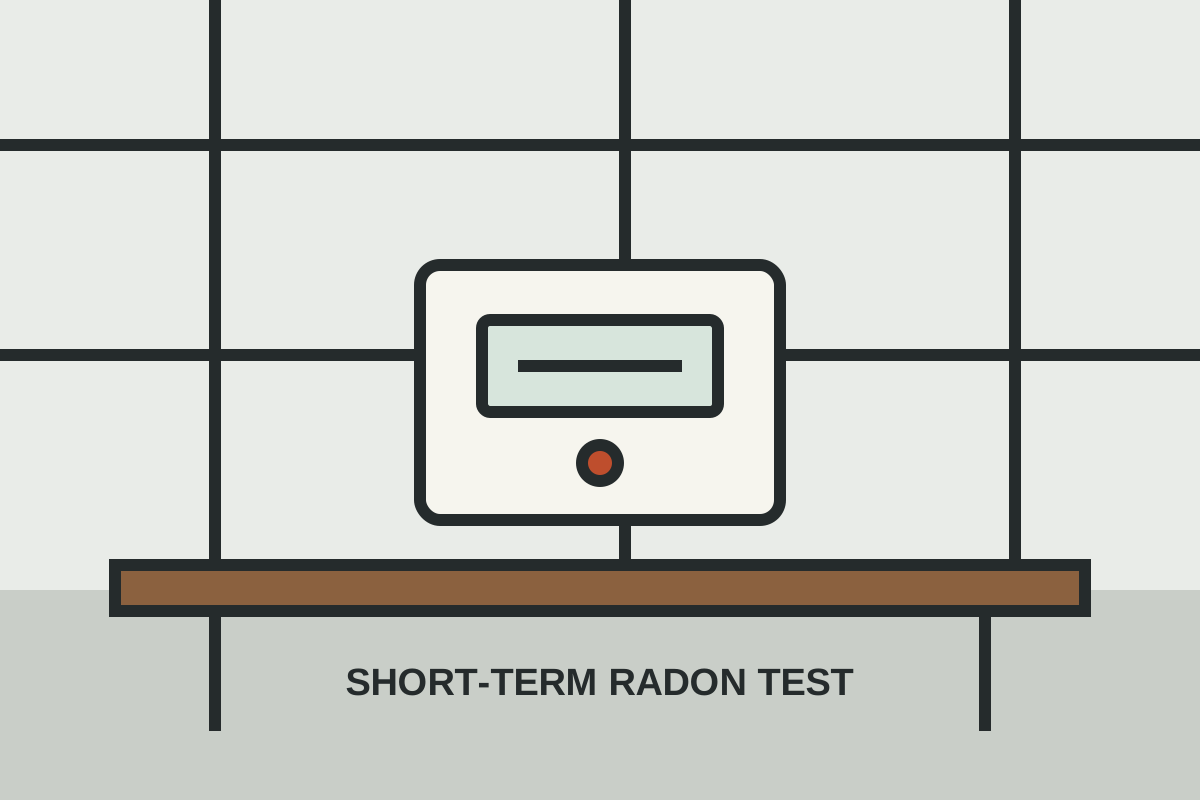
A short-term test runs 2 to 90 days. Most homeowner kits are charcoal canisters meant for 2 to 7 days. You open it, set it out, seal it when time’s up, and mail it to the lab.
A long-term test runs more than 90 days. Radon moves with the weather and the season, so a longer test smooths out the swings. In a place with winters like ours, a long-term test that covers part of the heating season is the most honest read on what your family breathes.
Most people start short because it’s fast. That’s fine. Treat one short result near the line as a first look.
Where to put the kit
This is where most tests go wrong.
- Use the lowest floor you actually spend time on. A finished basement family room counts. An unfinished storage basement you never sit in doesn’t.
- Set it about 20 inches off the floor, away from exterior walls, and a few feet from windows and doors.
- Stay out of kitchens, bathrooms, and laundry rooms.
- Keep it away from the sump pit, floor drains, and heat registers.
Closed-house conditions
For a short-term test, keep windows and exterior doors shut for at least 12 hours before you start and for the whole test. Normal coming and going is fine. Run the furnace or air conditioning as usual, but skip window fans and anything that pulls in outside air.
Reading the result
Labs report radon in picocuries per liter, pCi/L.
- Under 2 pCi/L. No action needed. Retest every few years, or after finishing the basement or replacing the furnace.
- 2 to 4 pCi/L. EPA suggests considering a fix. Many people run a long-term test to see where the level really sits.
- Above 4 pCi/L. DHS treats this as high. Confirm with a second test, then read what a radon mitigation system involves.
Doing it yourself or hiring it out
A homeowner kit is fine for your own information. For a home sale, or if the result will decide whether you spend money on a system, hire a certified measurement specialist. They use continuous electronic monitors with hourly readings and tamper checks. Wisconsin doesn’t require certification, so check that the person holds NRPP or NRSB measurement certification. Our page on finding a certified radon professional shows how to search.
Back to the Wisconsin radon guide.
Testing questions
Where can I get a test kit in Wisconsin?
Hardware stores and online sellers carry them, and DHS says most cost $10 to $30. Many regional Radon Information Centers offer kits at a reduced cost or free.
How long does a test take?
Short-term tests run 2 to 90 days, and most homeowner kits run 2 to 7. Long-term tests run more than 90 days and give a better picture of the whole year.
Should I test in winter?
Winter is a good time. The house is closed up and the heat is running, which tends to push radon levels up. A low summer result is worth confirming in the heating season.
My first test was 4.3. Do I need a system?
Run a second test first. A follow-up short-term test or a long-term test tells you whether that number was typical or a spike.
- We don't sell tests or install systems
- Every figure links to its source
- Built on Wisconsin DHS and EPA guidance